Wichita Orthodontics: Your Complete Guide to Braces, Aligners & Expert Care
Overview: Orthodontic Care in Wichita
Orthodontics is the branch of dentistry that straightens teeth and corrects bite issues using braces, clear aligners, and other appliances. While general dentists care for your overall oral health, orthodontists complete several additional years of specialty training to focus exclusively on tooth movement, jaw alignment, and facial development. At Dillehay Orthodontics in Wichita, KS, that expertise has been the foundation of our care for 50 years of family orthodontics.
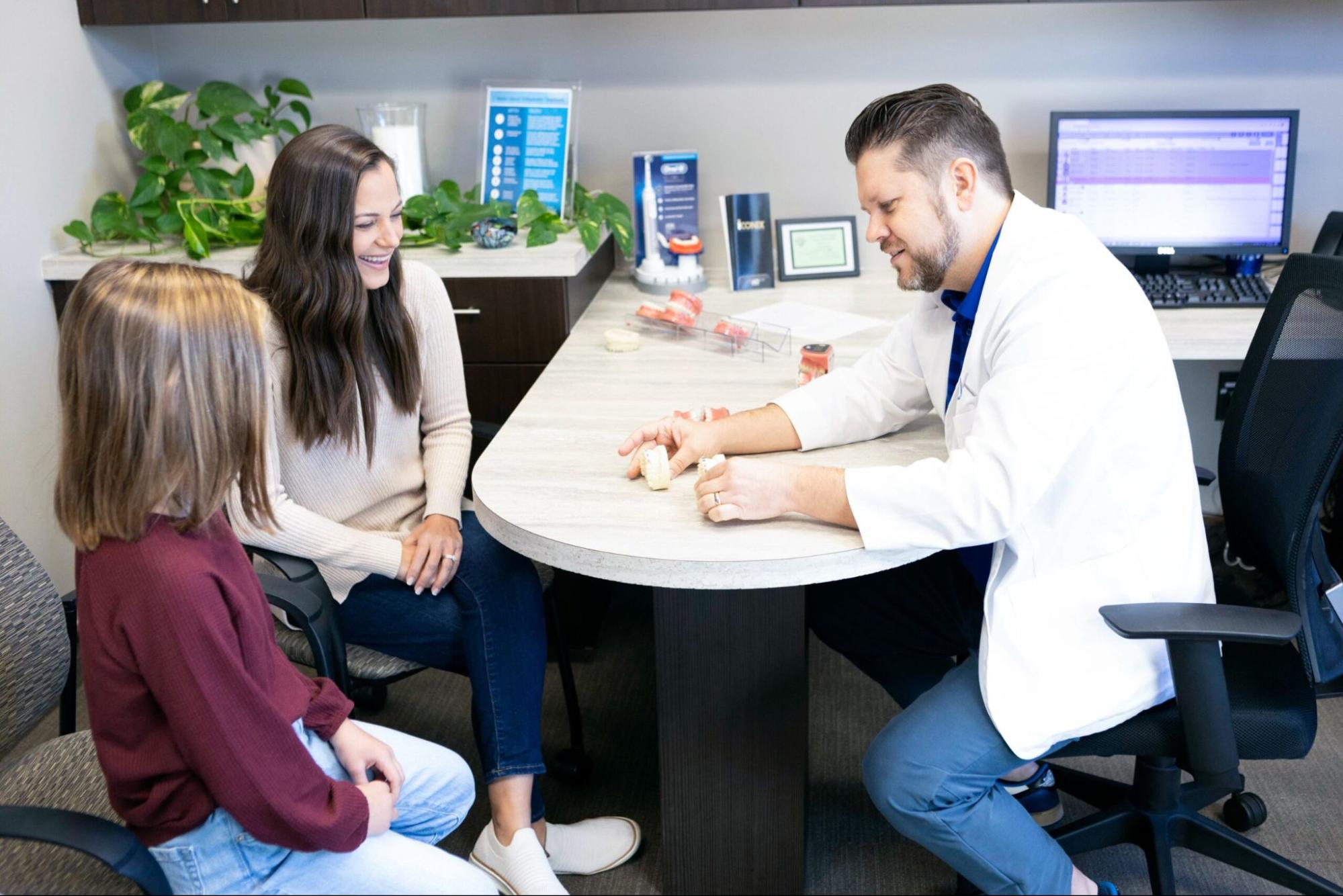
We're a father-and-son practice led by Dr. Ken Dillehay, DDS, MS and Dr. JK Dillehay, DDS, MS, both Board-Certified Orthodontists. That means we've met the highest voluntary standards in our specialty. Wichita families have trusted us for decades, and we're proud to serve you and your family across our Wichita, Derby, and Pratt locations.
We offer treatment options for every age and every smile goal:
- Metal braces for reliable, precise correction
- Clear aligners for a discreet, removable option
- Interceptive treatment for growing children
- Adult orthodontics and specialty care
- Retainers to protect your results long-term
- Same-day treatment so you can start your treatment the same day as your free consult
This guide walks you through each treatment option, what to expect in terms of cost and timing, how to know which approach fits your smile, and answers to the questions we hear most often from Wichita families. Whether you're researching for yourself or your child, we want you to feel informed and confident before you ever step into our office.
Metal Braces: Reliable, Proven Tooth Correction
Modern metal braces are smaller, smoother, and more efficient than the braces you may remember. Each bracket is bonded to a tooth and connected by a thin archwire. That wire (often a shape-memory NiTi wire originally developed using NASA technology) applies steady, gentle pressure to guide teeth into their ideal positions. Elastic bands and other small components help fine-tune the bite.
What Braces Can Correct
Metal braces handle a wide range of orthodontic concerns, including:
- Crowding when teeth overlap or don't have room to align
- Spacing or gaps between teeth
- Overbite where upper teeth extend too far over the lower teeth
- Underbite where lower teeth sit in front of the uppers
- Crossbite where upper and lower teeth don't meet correctly
- Open bite where front teeth don't touch when the back teeth close
For complex cases involving significant rotation, bite correction, or jaw alignment, braces often deliver the most precise, predictable results.
Treatment Timeline
Most patients wear braces for 12 to 24 months, though simpler cases may finish sooner and more involved cases can take longer. You'll typically visit us every 4 to 8 weeks for adjustments, and we'll track your progress at each visit.
Life with Braces
Braces fit into daily life more easily than most people expect. A few tips help you get the best results:
- Brush after meals and floss carefully around brackets
- Avoid hard, sticky, or chewy foods (think caramels, popcorn, ice)
- Wear a mouthguard for sports
- Keep every scheduled adjustment appointment
Who Are Braces Right For?
Braces work well for children, teens, and adults. They're an excellent choice when a case involves complex tooth movement, and they're often the most cost-effective route for the results you want. During your free consultation with Dr. JK Dillehay or Dr. Ken Dillehay, we'll walk through whether braces are the best fit for your goals.
[IMAGE_SUGGESTION: Close-up of a patient smiling with modern metal braces]
Clear Aligners: Discreet, Removable Straightening
Clear aligners are a nearly invisible way to straighten your smile using a series of custom-fit, removable trays. Each set of aligners gently shifts your teeth a little closer to their final position, and you switch to the next set about every one to two weeks. At Dillehay Orthodontics, we offer clear aligners including our proprietary Simply Clear system.
How Clear Aligners Work
The process starts with a digital scan of your teeth. There's no messy impression putty. From that scan, we map out your entire treatment plan and design a series of trays that move your teeth in small, controlled steps.
Why Patients Love Them
Here's what tends to draw people to aligners:
- Nearly invisible so most people won't notice you're wearing them
- Removable for eating, brushing, and flossing
- Comfortable with smooth plastic instead of brackets and wires
- Fewer office visits in many cases
- Easy to fit into busy schedules for students, professionals, and parents
The Compliance Factor
Aligners only work when you wear them. For steady progress, you'll need to keep them in 20 to 22 hours a day and only take them out to eat, drink anything besides water, and clean your teeth. If you know you'll forget or lose them, braces may be a better fit.
Best Cases for Aligners
Aligners work beautifully for mild to moderate crowding, spacing, and many bite corrections. Complex rotations, severe bite issues, or cases involving significant jaw alignment sometimes respond better to braces. During your free consult, we'll show you exactly what aligners can (and can't) do for your specific smile.
Treatment Time & Refinements
Most aligner cases finish in 12 to 18 months, though shorter treatments are common for perfect your smile touch-ups. Near the end of treatment, we may add a short round of "refinement" aligners to perfect your smile. And yes, we offer same-day starts for many aligner patients, so you can start your treatment the same day as your free consult.
Interceptive & Early Orthodontic Treatment for Children
The American Association of Orthodontists (AAO) recommends every child have a first orthodontic evaluation by age 7. That may sound early, but by age 7 enough permanent teeth have come in for a Board-Certified Orthodontist to spot developing issues that are much easier to address while a child is still growing.
Dr. JK Dillehay and Dr. Ken Dillehay have decades of combined experience guiding young smiles in Wichita, Derby, and Pratt.
What Interceptive (Phase 1) Treatment Addresses
Early orthodontic treatment isn't about giving kids braces sooner. It's about using natural growth to solve issues before they become bigger ones. Phase 1 treatment can help with:
- Narrow upper jaw or crossbite
- Severe crowding with not enough space for permanent teeth
- Protruding front teeth at risk of injury
- Thumb-sucking or tongue habits affecting bite development
- Early or late loss of baby teeth
- Jaws that don't line up properly
Signs Your Child May Need an Evaluation
Watch for these clues:
- Difficulty chewing or biting
- Mouth breathing
- Speech concerns
- Teeth that don't come together normally
- Crowding, gaps, or misplaced teeth
- Jaws that shift or make sounds
Phase 1 vs. Phase 2
Phase 1 typically happens between ages 7 and 10. It uses growth to guide jaw development, create space, or correct a bite problem while it's easier to fix. Phase 2 usually follows in the early teens once all the permanent teeth are in, often with braces or aligners for full alignment.
Early treatment can reduce the need for extractions, minimize the chance of jaw surgery later, and shorten the time in braces during the teen years. That said, not every child needs Phase 1 care, and we'll never recommend treatment that isn't necessary.
Our Approach to Kids
We know a first ortho visit can feel like a big deal for a kiddo. Our team greets kids by name, walks them through each tool before we use it, and explains everything in kid-friendly language, with parents right there for every step. If your child doesn't need treatment yet, we'll simply monitor their growth at no cost until the time is right.
Adult Orthodontics & Specialty Treatments
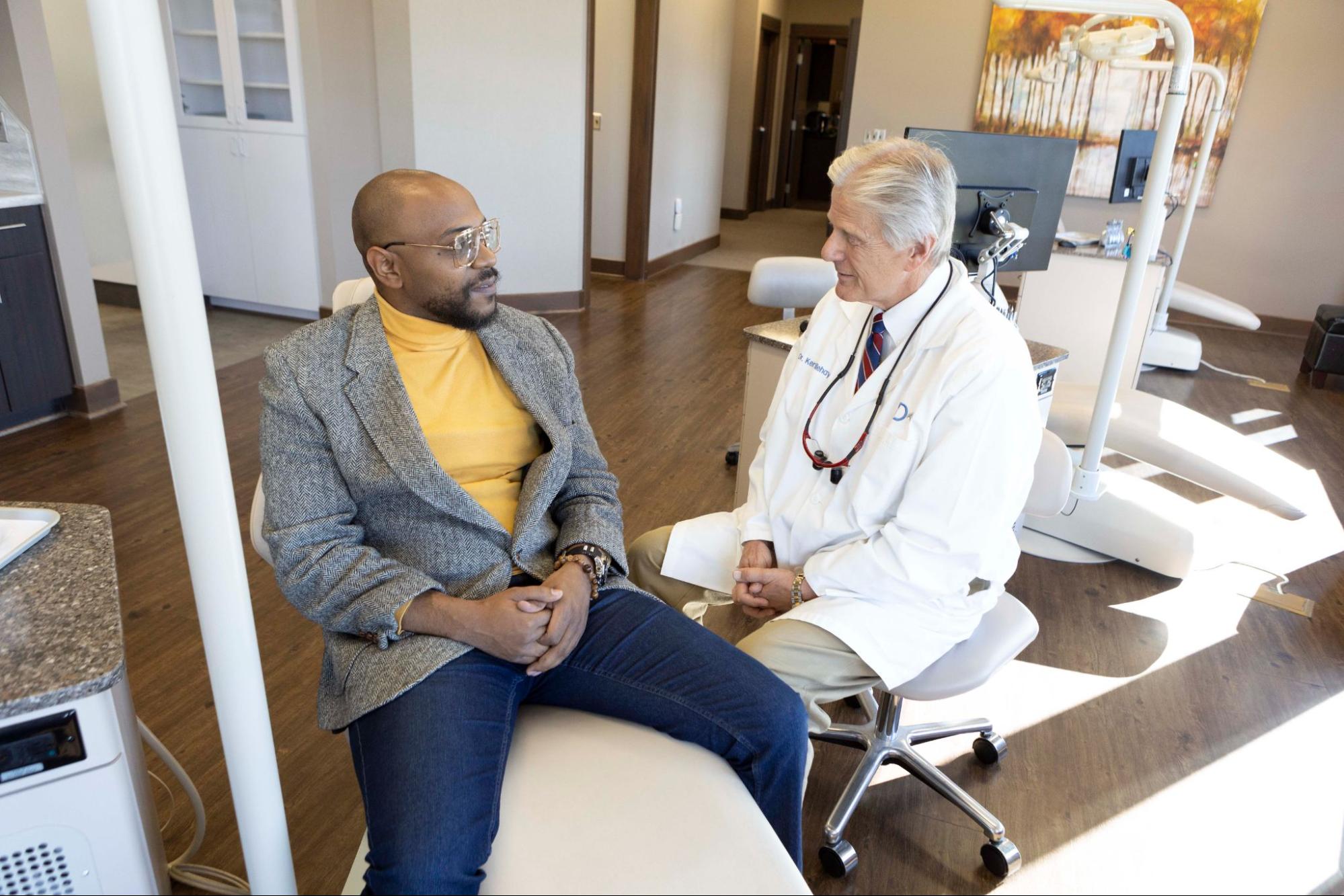
About one in four orthodontic patients today is an adult, and we see that reflected in our Wichita chairs every week. Whether you skipped braces as a teen, had treatment that has since shifted, or want to address a bite concern, we have options built around your life.
Treatment Options for Adults
- Clear aligners for a discreet, professional-friendly look
- Ceramic braces with tooth-colored brackets that blend in
- Traditional metal braces for efficient, cost-effective results
- Retainers to hold prior orthodontic work in place
Specialty Treatments We Offer
Some smiles need more than tooth movement alone. Our doctors are trained in several specialty services:
- TMJ / TMD treatment for jaw joint discomfort, clicking, or headaches
- Gummy smile treatment using diode laser techniques
- Surgical orthodontics for significant jaw discrepancies, coordinated with an oral surgeon
- Interceptive care for adults with narrow arches or bite issues
Addressing Shifting and Relapse
If you had braces years ago and your teeth have started to move again, you're not alone. Teeth shift naturally over a lifetime, especially without consistent retainer wear. A short round of clear aligners can often bring things back into line quickly.
Coordinating with Your Dentist
For adults planning crowns, veneers, implants, or other restorative work, orthodontics is often the first step. We work directly with your dentist to align your teeth into the ideal position so your restorative results look and function their best.
Long-Term Retention
Once your active treatment wraps up, a custom retainer keeps your smile exactly where we finished it. We'll talk through your retainer options and long-term wear schedule so your results last for decades.
[IMAGE_SUGGESTION: Professional adult smiling confidently, showing straight teeth]
Cost of Orthodontics in Wichita: Pricing, Insurance & Financing
In Wichita, braces typically cost between $3,000 and $7,000, depending on the complexity of your case, the type of braces you choose, and how long treatment takes. Clear aligners generally fall in the same range or slightly higher for comparable cases. At Dillehay Orthodontics, your free consultation includes a clear, itemized quote so there are no surprises.
What Affects Your Cost
Your specific price depends on several factors:
- Case complexity (minor spacing vs. full bite correction)
- Treatment length (how many months of active care)
- Treatment type (metal braces, ceramic braces, or clear aligners)
- Age and growth considerations for children in Phase 1 or Phase 2 care
- Any specialty services like TMJ care or surgical coordination
Is $6,000 Too Much for Braces?
Not necessarily. Nationally, full orthodontic treatment often falls in the $5,000 to $7,000 range for complete orthodontic care, according to industry sources. A $6,000 quote for a moderately complex case is well within the typical range for Kansas and the rest of the country. What matters more than the sticker price is the value: a Board-Certified Orthodontist, proven results, and a plan that fits your life.
Insurance Coverage Basics
Many dental insurance plans include an orthodontic benefit, often with a lifetime maximum for each covered person. Common features include:
- A percentage of treatment cost covered (often around 50%)
- A lifetime maximum benefit per patient
- Age limits (some plans cover only children under 19)
- Waiting periods before benefits begin
Our team files insurance for you and helps you get the most out of your benefits.
Dillehay's Financing Options
We work hard to make treatment doable for every family budget:
- Flexible low down payment plans
- Zero-interest monthly payment plans
- Pay-in-full discount for patients who pay upfront
- Insurance filing assistance
- Free consultation so you can get a real quote at no cost
Wichita families shouldn't have to choose between a great smile and an affordable monthly payment. That's why we've built our flexible payments around what actually works for real household budgets, with options that keep the math simple and predictable.
Braces vs. Clear Aligners: Which Is Right for You?
Both braces and clear aligners can deliver amazing results. The right choice depends on your specific case, your lifestyle, and your goals. Here's a side-by-side look at how they compare.
| Feature | Metal Braces | Clear Aligners |
|---|---|---|
| Appearance | Visible brackets and wires | Nearly invisible |
| Removable | No, fixed to teeth | Yes, remove to eat and clean |
| Comfort | Some tenderness after adjustments | Smooth plastic, mild pressure with new trays |
| Treatment Time | 12-24 months typically | 12-18 months typically |
| Cost | $3,000-$7,000 | Comparable or slightly higher |
| Cases Treated | Simple to very complex | Mild to moderate; some complex |
| Compliance Required | Low (they're always on) | High (20-22 hours daily wear) |
| Best For | Teens, complex bites, budget-focused | Adults, professionals, mild-to-moderate cases |
| Food Restrictions | Yes (avoid hard, sticky foods) | None (just remove trays to eat) |
| Office Visits | Every 4-8 weeks | Often fewer visits |
How We Help You Decide
During your free consult, Dr. JK Dillehay or Dr. Ken Dillehay will look at your teeth, take digital scans, and walk you through both options honestly. If one is clearly better for your case, we'll tell you. If both would work, the choice is yours, and we'll support whichever path fits your life best.
Frequently Asked Questions About Wichita Orthodontics
How much do braces typically cost in Wichita, Kansas?
Braces in Wichita generally cost between $3,000 and $7,000 depending on case complexity, the type of braces chosen, and how long you need treatment. At Dillehay Orthodontics, your free consultation includes a clear price quote and a review of your insurance benefits and financing options, so you know exactly what to expect.
Is $6,000 too much for braces?
No, $6,000 is well within the typical range for orthodontic care nationally and in Kansas. Full treatment with a Board-Certified Orthodontist often falls between $5,000 and $7,000. What matters most is that you're getting expert care, a personalized plan, and financing that fits your budget.
Can I see an orthodontist without a referral?
Yes. You don't need a referral from your dentist to see an orthodontist in Wichita. You can call Dillehay Orthodontics directly and schedule a free consultation. Many families come to us on their own after hearing about us from friends, and many are referred by their family dentist.
What is the average cost of braces in Kansas?
Average orthodontic costs in Kansas typically range from $3,000 to $7,000 for children and teens, with adult treatment sometimes running slightly higher due to case complexity. Clear aligners fall in a similar range. Prices vary based on treatment length, appliance type, and any specialty care needed.
How long does orthodontic treatment take?
Most orthodontic treatment takes 12 to 24 months. Simple cases with minor crowding may finish in as little as 6 months, while more involved cases can take 30 months or more. Wearing your appliance or aligners as directed and keeping your appointments are the biggest factors in finishing on time.
At what age should my child first see an orthodontist?
The American Association of Orthodontists recommends a first orthodontic evaluation by age 7. By that age, enough permanent teeth have come in for an orthodontist to spot developing issues. Most children won't need treatment right away, but early evaluation lets us catch problems while they're easier to correct.
Additional Resources & Related Treatments
Ready to explore more? These resources can help you keep learning:
- Treatment pages: Clear aligners, metal braces, retainers, and specialty services
- Before & after gallery to see real smile transformations from Wichita families
- Patient testimonials from our orthodontic family
- Financial information with details on payment plans and insurance
- Virtual consult tool for a quick, no-pressure look at your options from home
- American Association of Orthodontists (AAO) at aaoinfo.org for patient education
- American Board of Orthodontics (ABO) at americanboardortho.com to learn what board certification means
Start Your Smile Transformation with a Free Consultation
Ready to see what's possible for your smile? Schedule your free consultation at Dillehay Orthodontics and meet Dr. Ken Dillehay and Dr. JK Dillehay, Board-Certified Orthodontists carrying on 50 years of family orthodontics. We offer same-day treatment starts, flexible payment plans, and convenient locations in Wichita, Derby, and Pratt. Book online or give us a call. We can't wait to welcome you and your family.
Schedule Your Free Consultation